Clinical-Evidence in Practice: Confidence & Reassurance
Heidi Team
March 1, 2026•5 min read
How Heidi Evidence builds confidence in everyday clinical decisions
Confidence in medicine comes from knowing your decisions are supported by trusted evidence.
Heidi Evidence provides citation-backed clinical information drawn from journals, regional guidance, and specialty standards — designed to support, not replace, clinical judgment.
Below are reflections from early adopters who refined Heidi Evidence through real-world use and practical feedback.
Confidence inside the consult
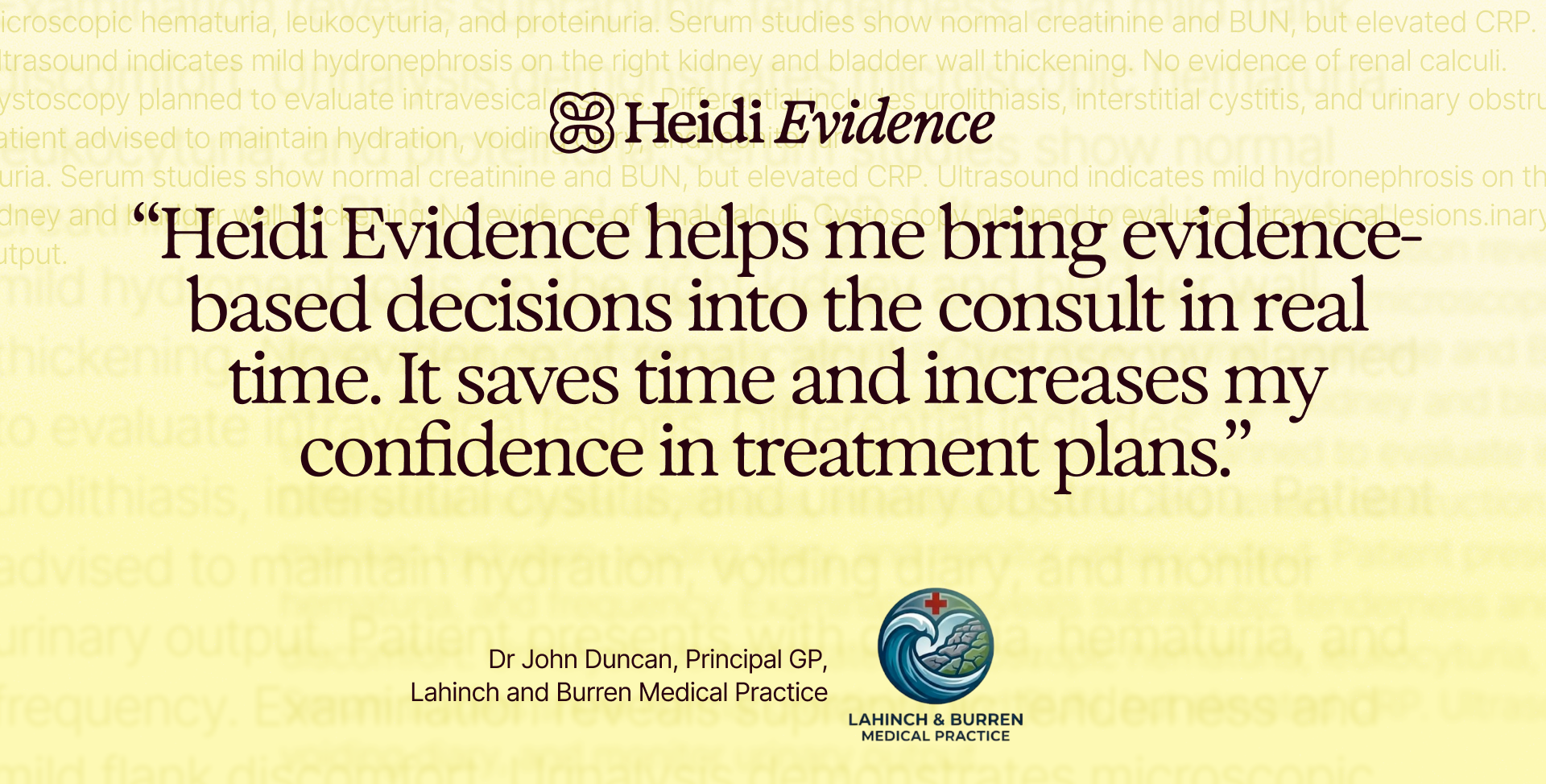
Dr John, Principal GP for his clinic in County Clare, Ireland, described Heidi Evidence as:
“[helping him] bring evidence-based decisions into the consult in real time. It saves time and [increases his] confidence in treatment plans.”
For clinicians like John, reassurance doesn’t come from convenience alone. It comes from knowing that what supports their decision-making is drawn from trusted guidelines and peer-reviewed research .
Within Evidence, every claim is accompanied by transparent citations with direct source attribution. Clinicians can immediately verify the origin of a recommendation, explore primary sources, review guideline alignment, and check relevance to their region. Built-in source faithfulness checks help identify unverifiable claims, making uncertainty visible where it exists.
As Dr Pierre Dubois, DC (SwissAlliance dob SwissChiropractic), puts it:
“Clear, well-structured outputs that I can apply immediately. I particularly value the traceable sources and hyperlinks, which make verification fast and transparent.”
Whether moving between consults or reviewing a case later in the day, access to region-aware, citation-backed information remains consistent — whether on web, desktop, or iOS. Confidence does not depend on being at your desk.
Confidence in Complexity
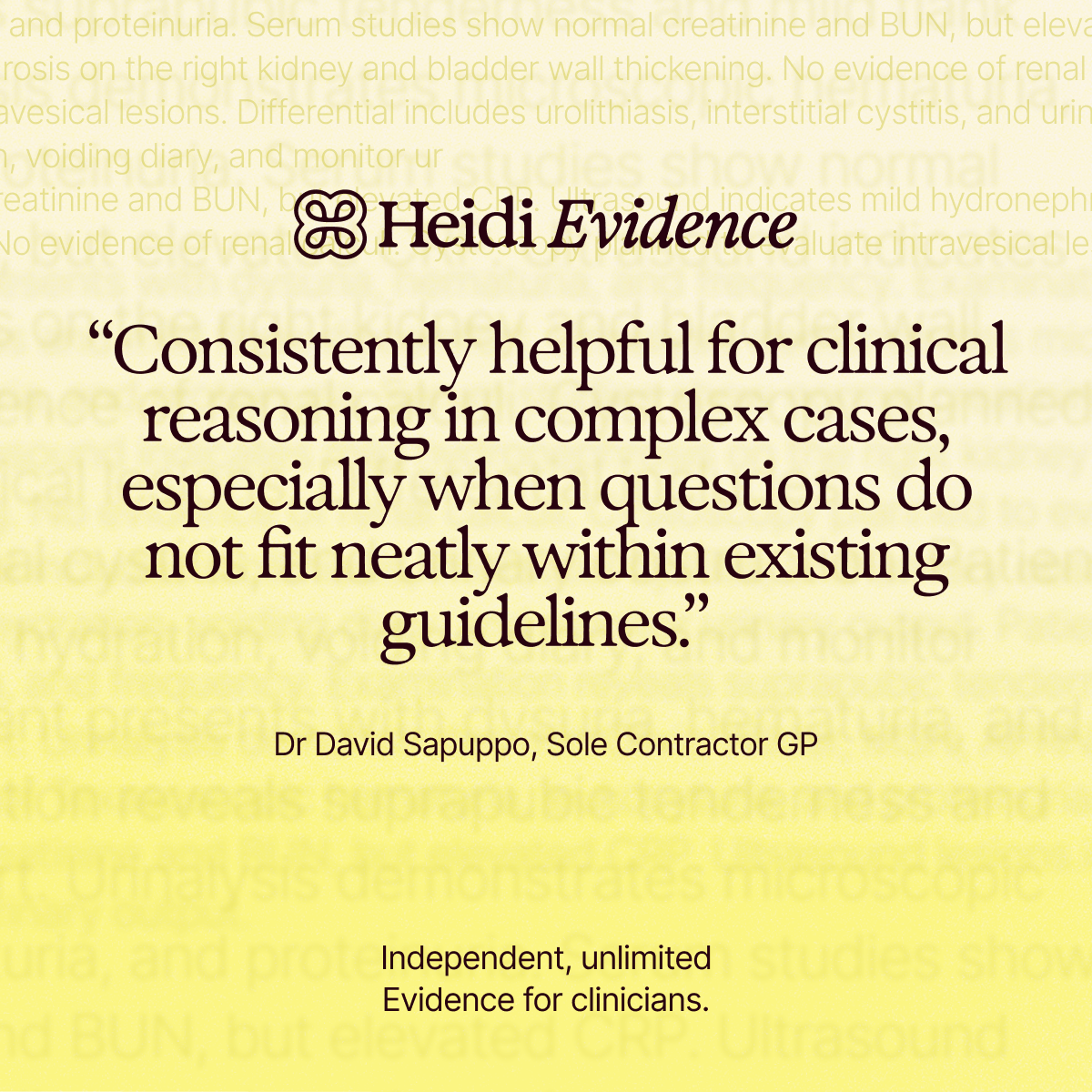
In Northcote, Melbourne, Dr David Sappupo describes Heidi Evidence as:
“Consistently helpful for clinical reasoning in complex cases, especially when questions do not fit neatly within existing guidelines.”
Reassurance matters most when managing layered complexity — care shaped by age, comorbidities, medications, and lifestyle factors.
Evidence allows clinicians to refine questions over multiple turns with preserved context, adjust the depth of responses from concise summaries to detailed reviews, and for Clinician-tier users, tailor answers using patient context such as age, medications, and conditions.
Rather than delivering rigid guideline summaries, Evidence supports nuanced exploration, allowing different alternatives to be unpacked so the clinician can make the best choice for their patient.
Dr Raymond Chan, General Practitioner, summarises this balance well:
“Useful when applied in the right context. A solid support tool in practice.”
Evidence does not replace clinical judgment. It strengthens it — by surrounding it with transparent, verifiable data.
A Tool that Challenges Confirmation Bias
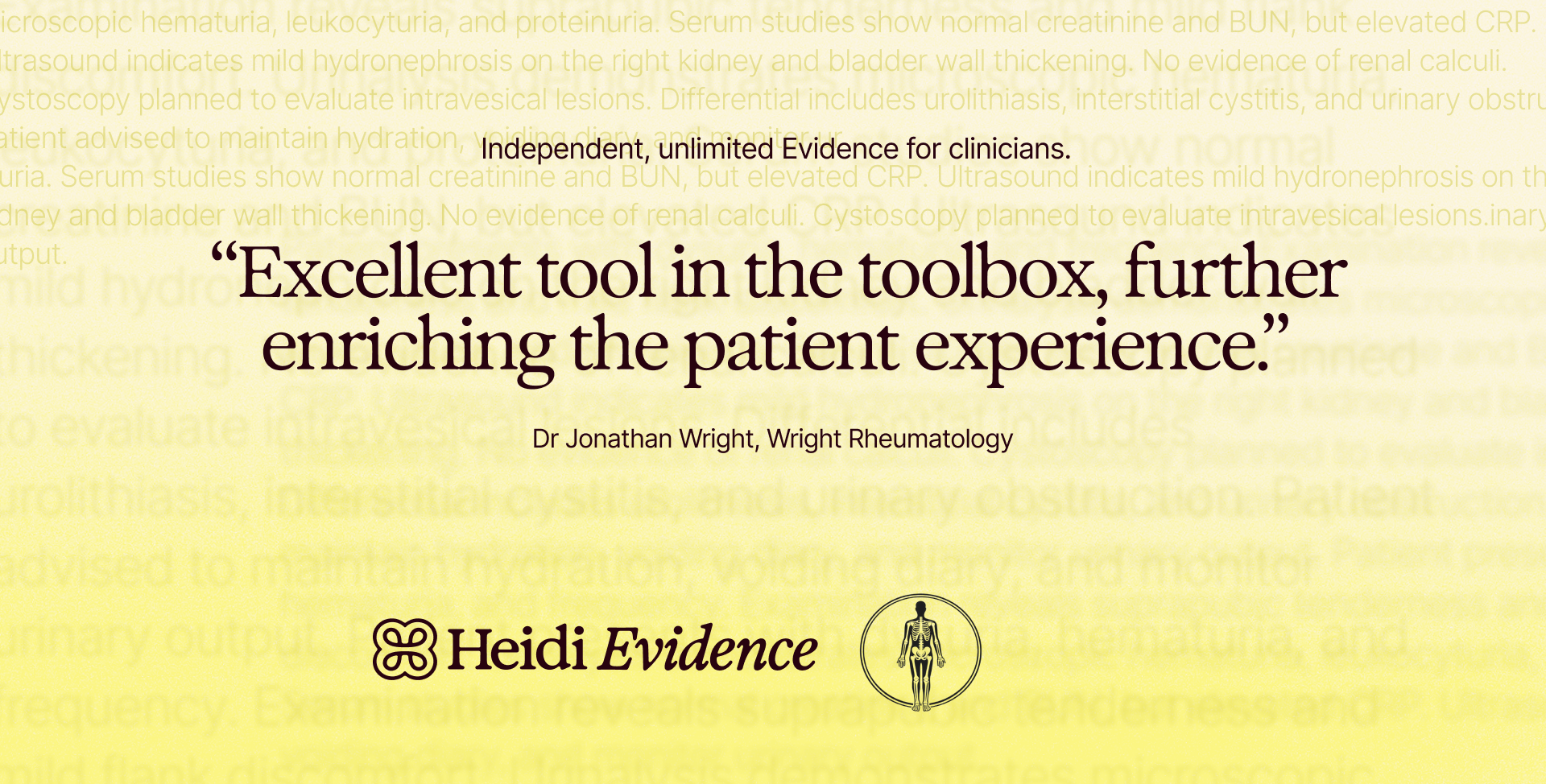
Rheumatologist Dr Jonathan Wright highlighted something many clinicians consider when using AI tools: confirmation bias.
By grounding responses in independent clinical sources and clearly attributing them, Evidence introduces alternative considerations under specific patient circumstances. Instead of echoing a clinician’s prompt, it expands the clinical frame.
He described it as:
“An excellent tool in the toolbox, further enriching the patient experience.”
Reassurance Beyond the Consult
For Dr John, reassurance also extends to practical tasks, including creating structured explanations for older patients and communicating complex conditions more clearly.
Evidence supports clinical workflows through structured outputs suitable for documentation or patient explanation, flexible exports to PDF, tables, spreadsheets, or Word, contextual review of uploaded documents such as test results or referral letters, built-in clinical calculators, evidence history, and tracking of eligible CPD or CME activity linked to evidence use. These capabilities are designed to support clinical work — not automate it.
Dr Andrew Jeyaprakash, GP at Terrace Clinic, shares:
“Heidi has become a real partner during consults and something I rely on day to day.”
Confidence You Can Verify
Across specialties and continents, one theme repeats itself: reassurance.
Resident physician at the University of California, San Diego, Giuseppe Ingrasci says:
“I use Heidi Evidence every day. It has become part of how I work as a resident.”
In a profession defined by uncertainty and responsibility, confidence must be built on visible sources and verifiable guidance — information that can be checked, explored, and trusted
Heidi Evidence is free and available now to clinicians globally. Sign up today.